
-
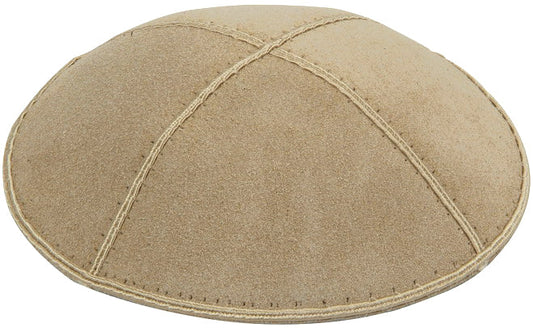
Suede Kippahs - Multi Solid Colors
Regular price $42.00Regular price -
Two Tone Suede Kippah - Choose Any 2 Colors of Suede
Regular price $3.80Regular price


Frequently Asked Questions
Yes — bulk orders are the core of this collection, for weddings, bar and bat mitzvahs, brit milah, holidays, and community events. Solid-color suede kippahs are sold by the dozen, and the two-tone suede kippah lets you choose any two suede colors so the whole run matches your event.
Yes — the solid-color suede kippahs can be personalized with a name, date, or other detail, free on orders of five dozen or more. This is standard practice for weddings and b'nai mitzvah where the kippah doubles as a keepsake for guests. Decide your wording and colors once the event date is set, and contact the store to confirm turnaround time for your quantity before finalizing.
Order enough to cover your full expected guest count, plus a cushion of extras — guests forget their own, some take extras as keepsakes, and you can't restock mid-ceremony. A modest overage beyond the confirmed list is the common approach rather than an exact count. Leftover kippot keep indefinitely, so rounding up carries no real downside.
A two-tone suede kippah is a four-panel suede kippah made in two alternating colors of your choice — this collection's version lets you pick any two suede colors. It's the standard format for event orders because the two tones can match a wedding or bar mitzvah color scheme while staying formal enough for the ceremony.
Our event kippot are made from suede. Suede is the most common event choice because it holds color well, suits both formal and casual occasions, and comes in two styles here: solid-color (ordered by the dozen) and two-tone, where you choose any two suede colors.
A kippah is worn as a head covering during prayer, in synagogue, and at Jewish lifecycle events like weddings and b'nai mitzvah — which is why hosts provide a basket of them for guests. Practices vary widely: some men wear one at all times, others only for religious occasions. For events, the host's job is simply to have enough on hand for everyone who wants one.