


Frequently Asked Questions
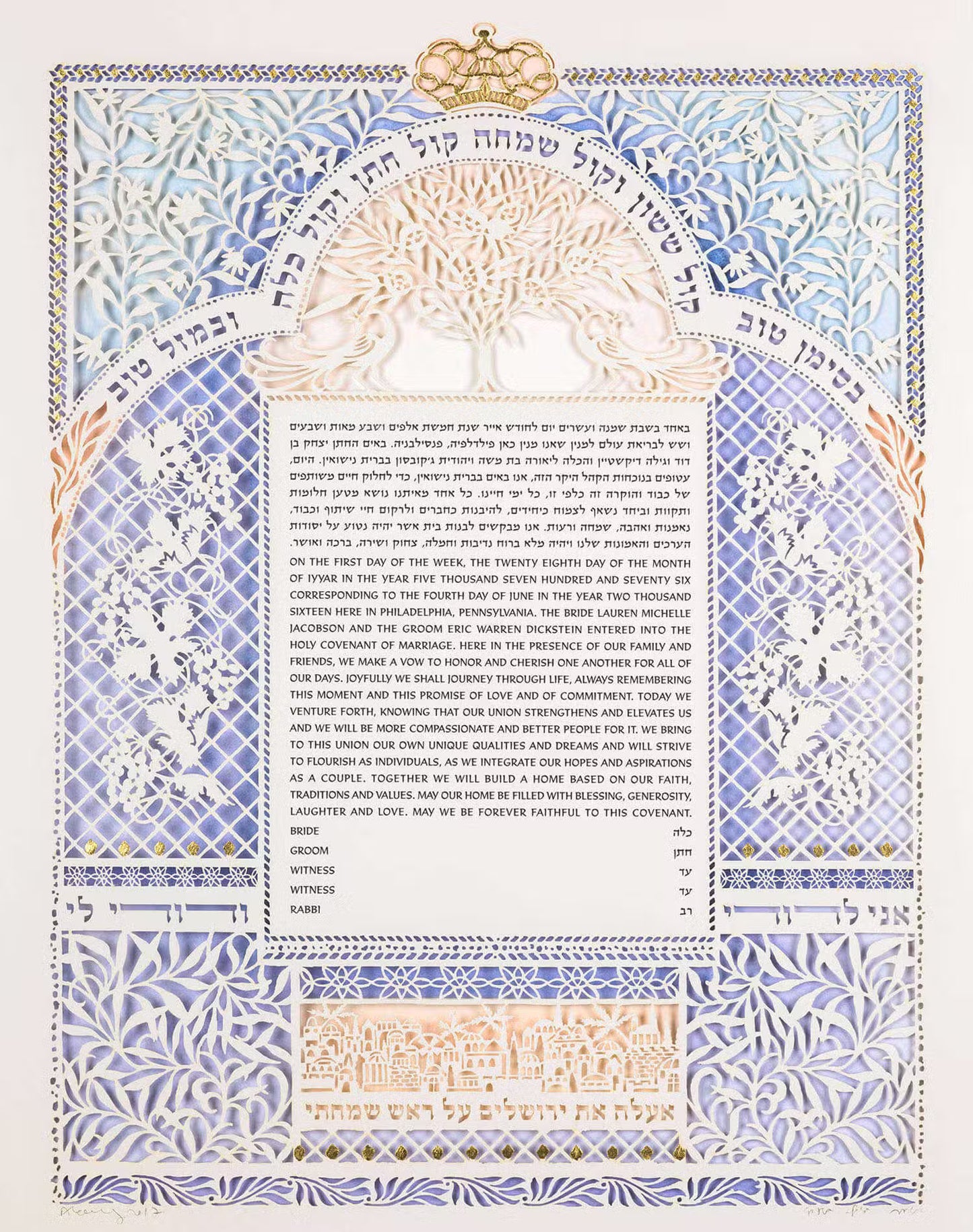
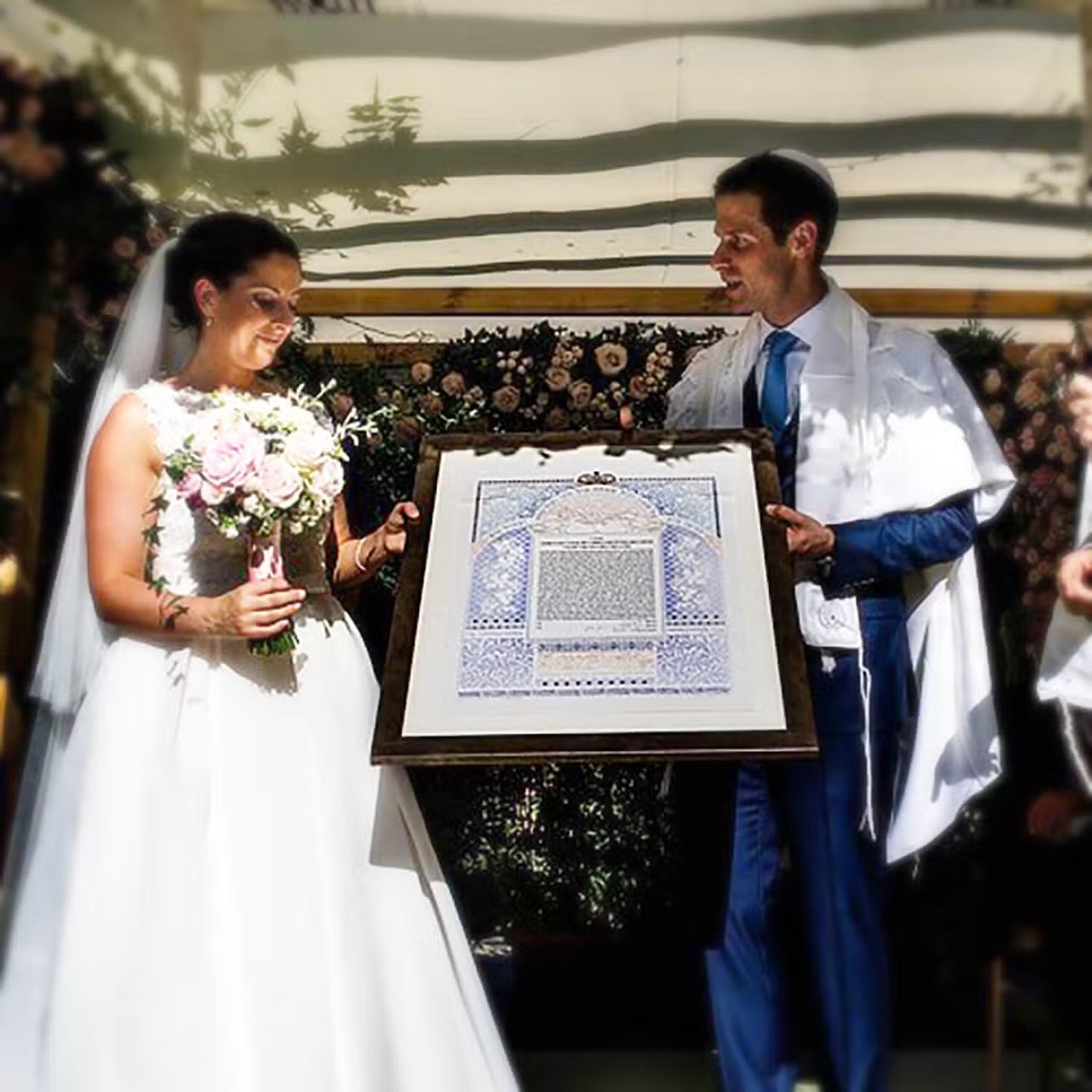
A ketubah is the traditional Jewish marriage document, signed by the couple and two witnesses either just before or during the wedding ceremony, and in many traditions read aloud in front of guests. It formalizes commitments the couple makes to one another and, in Orthodox and many Conservative ceremonies, carries specific legal and religious weight beyond a symbolic gesture. This Jerusalem Vineyards Ketubah turns that tradition into a two-layered papercut artwork by designer Danny Azoulay, meant to be signed at the wedding and then framed and displayed in the couple's home for years afterward.
The wording differs mainly in how binding and traditional the language is - Orthodox text closely follows the most traditional Aramaic legal formula, Conservative text often adds a clause addressing modern concerns such as divorce protections, and Reform or non-denominational text is typically written in more contemporary, egalitarian language, sometimes in English rather than Aramaic. Because officiants and communities can have specific requirements, this listing lets you either choose from more than ten established versions yourself or have a ketubah expert help you match the wording to your ceremony.
Yes - the listing includes a personalization option you select before checkout, letting you add your own details to the piece. Personalizing a ketubah is common practice, since the document typically includes the couple's names, the date, and sometimes the location of the ceremony, woven into or around the artwork. Because the artwork and text are chosen separately on this listing, take care of both selections - your ketubah version and your personalization - before finalizing your order so everything is ready in time for the wedding.
This ketubah measures 23.5 inches high by 17 inches wide. Because it's a two-layered papercut rather than a flat printed document, it needs a frame with enough depth to accommodate the layered artwork without pressing the layers flat against the glass, which is worth mentioning to your framer if you're not framing it through a specialty ketubah shop. Most couples have their ketubah framed after the wedding rather than before, since minor handling during the ceremony is easier to manage unframed.
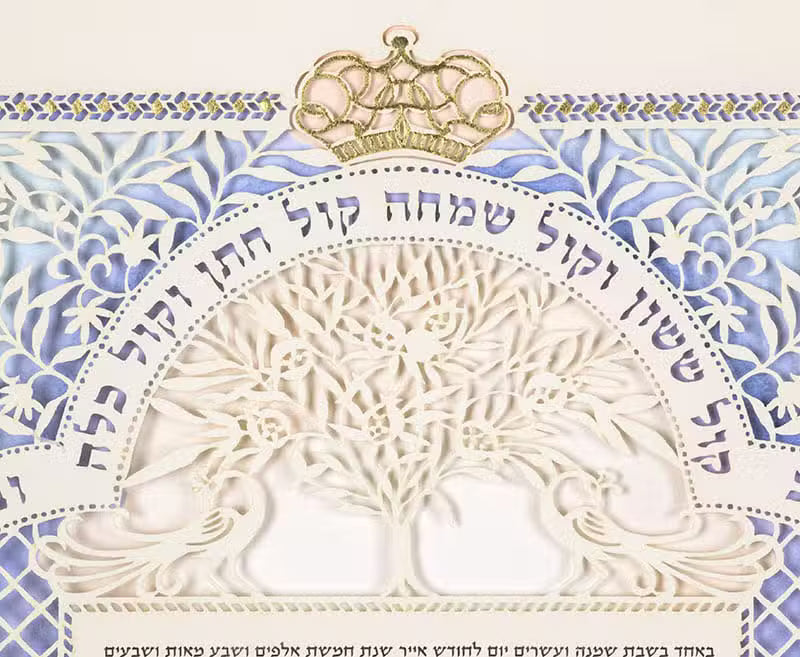
The design centers on vineyard imagery: a golden crown at the top represents the wisdom of the Torah, a pomegranate tree below it symbolizes abundance and fruitfulness, two peacocks standing beneath the tree represent beauty, and grapes woven through the papercut reference the significance of wine throughout the Jewish wedding ceremony, from the blessings under the chuppah to the shared cup afterward. Together, the motifs turn the ketubah into a scene rather than a plain certificate, giving the couple artwork with a clear, cohesive story.
Most couples have their ketubah framed and hung in their home, often in a hallway, bedroom, or living room, where it becomes a lasting piece of wall art rather than a document tucked away in a drawer. Because papercut ketubahs like this one are delicate, framing them under glass, ideally with some UV protection to help the ink and paper hold their color over the years, is the most common way to protect the artwork while still keeping it visible day to day.